
Stable Floors Built on Properly Leveled Substrate
Laminate Flooring in Vancouver for homes with uneven subfloors and moisture control concerns
Older homes in Vancouver and the Portland corridor often have subfloors that have settled, warped, or sustained water damage over decades of use. Laminate flooring fails quickly when installed over compromised substrate because the material relies on a stable, level base to keep joints locked and edges from swelling. NW Priym Construction begins every laminate installation with subfloor assessment and leveling to address the substrate issues that cause edge gaps and joint separation in Vancouver-area homes.
The process starts with moisture testing and visual inspection to identify areas where the subfloor has sagged, cupped, or retained moisture. Leveling compound is applied where needed, and underlayment is selected based on the existing floor material and the room's moisture exposure. Acclimation, layout planning, and transition trim are handled by in-house crews, so the installation avoids the quality gaps that result from subcontractor turnover or rushed schedules.
Arrange an on-site evaluation to assess your subfloor stability and moisture conditions before material selection.
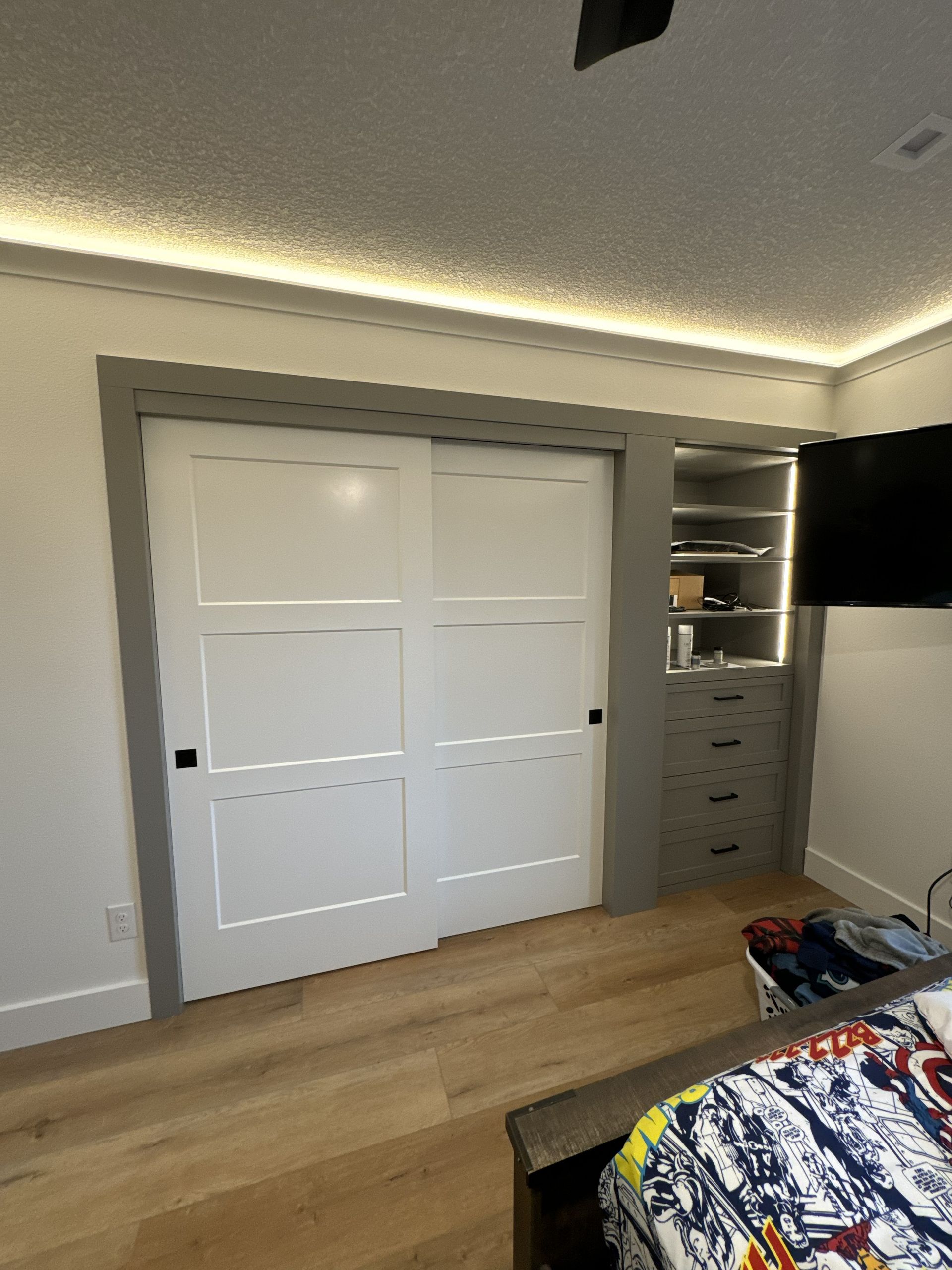
Subfloor leveling eliminates the voids and high spots that cause laminate planks to flex when walked on, which stresses the locking joints and leads to separation. Moisture barriers are installed between the subfloor and underlayment to prevent ground moisture or spills from reaching the laminate core, which swells and distorts when exposed to water. Underlayment thickness and material are chosen based on whether the existing subfloor is concrete, plywood, or engineered wood, since each requires different cushioning and vapor control.
After installation, the floor sits level without bounce or noise underfoot, and seams stay tight without gaps developing along high-traffic paths. Transition strips between rooms align flush with adjoining surfaces and allow for expansion without creating tripping hazards. The floor handles seasonal humidity changes without lifting at the perimeter or developing edge swell near doorways and exterior walls.
The service includes subfloor leveling and moisture barrier installation, but it does not cover baseboard removal or reinstallation unless coordinated separately. Furniture must be moved before installation begins. Installation duration depends on the extent of subfloor repair needed and the acclimation time required for the laminate to adjust to indoor conditions.
Common Questions About Laminate Installation
Many laminate failures trace back to substrate preparation that was skipped or done incorrectly, particularly in older Vancouver-area homes where subfloor condition varies significantly from room to room.
What causes laminate flooring to buckle after installation?
Buckling typically results from inadequate expansion gaps at the perimeter, moisture infiltration from below, or installation over an uneven subfloor that allows the planks to shift under load.
How do you determine if a subfloor needs leveling?
A straightedge or laser level reveals deviations greater than one-eighth inch over a ten-foot span, which is the tolerance threshold for laminate installation—anything beyond that causes joint stress and eventual separation.
Why does underlayment selection matter for laminate in Vancouver?
Vancouver's wet climate and older home construction mean many subfloors retain ground moisture, so vapor barriers must be matched to the subfloor material and room location to prevent swelling at plank edges.
What is the difference between laminate and LVP for moisture-prone rooms?
Laminate has a wood fiber core that swells when wet, while LVP uses a plastic core that resists water—both require proper moisture barriers, but LVP tolerates direct water exposure better in bathrooms and kitchens.
When should I replace laminate flooring instead of repairing it?
If edge swelling, joint separation, or water damage affects multiple planks, replacement is usually necessary because laminate joints do not reseal once compromised, and moisture damage spreads through the core material.
NW Priym Construction completes all laminate installations with employee crews who handle subfloor prep, moisture control, and trim work without delegating to subcontractors. Contact the office at (360) 566-5093 to schedule a subfloor inspection and discuss material options based on your home's specific conditions.